
- All
- Product Name
- Product Keyword
- Product Model
- Product Summary
- Product Description
- Multi Field Search




| Quantity: | |
|---|---|


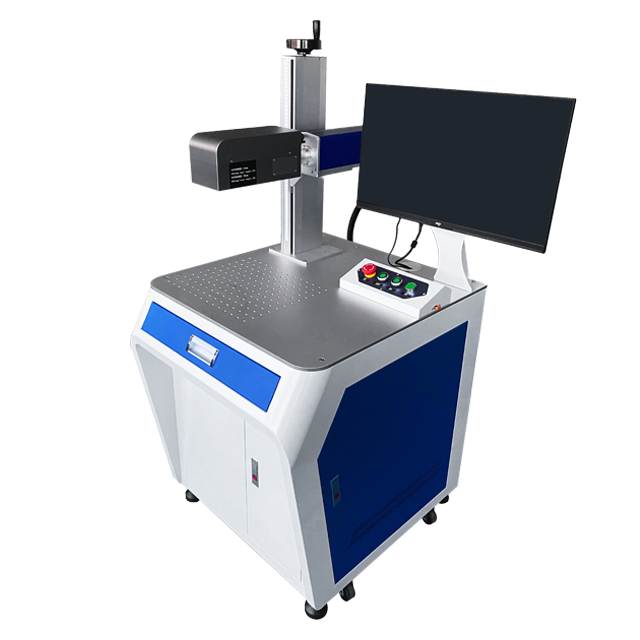
Machine Type: 3D Fiber Laser Marking Machine
Main Application: Large metal parts, curved surfaces, stepped surfaces, and height-changing workpieces
Typical Work: Serial numbers, logos, QR codes, traceability marks, technical graphics, selected engraving
Available Power: 60W / 100W / 200W
Marking Area Options: 300×300 mm up to 1600×1600 mm depending on configuration
Optional Functions: Rotary device, lift height option, fixture customization, workstation integration
Support: Sample marking, configuration advice, OEM / ODM discussion
A standard flat-field laser marker is suitable for many flat parts, but it becomes less ideal when the workpiece is large, curved, stepped, or positioned at different heights. In these cases, maintaining stable focus and readable marking across the full area becomes more important.
This 3D laser marking machine is developed for industrial users who need more consistent marking on complex metal parts and wider work areas. As a large format laser marking machine, it is suitable for industrial traceability, product identification, logo marking, code marking, and selected engraving tasks where a standard flat marking setup may not be enough.
This machine is intended for applications where part size or surface geometry makes standard flat-surface marking less reliable. Typical examples include large plates, housings, formed metal parts, cylindrical fittings, tooling surfaces, machined components, and other workpieces where the marking area does not remain on a single plane.
In these situations, the main concern is often not whether the laser can create a mark, but whether the mark remains clear, uniform, and readable across the target area. A 3D dynamic focusing laser marking machine addresses that requirement through focus control and process compensation, making it more suitable for demanding metal marking tasks.
For buyers comparing a 3D system with a standard fiber laser marker, the difference usually comes down to part geometry, marking field size, and process flexibility in actual production.
| Comparison Item | Large Format 3D Laser Marking Machine | Standard Fiber Laser Marker |
|---|---|---|
| Best Surface Type | Large, curved, angled, cylindrical, irregular, height-changing parts | Flat or nearly flat surfaces |
| Focus Handling | Dynamic focus adjustment for more complex geometry and larger work areas | Usually fixed focus within a limited plane |
| Suitable Workpieces | Large metal parts, formed parts, cylinders, relief surfaces, irregular workpieces | Flat plates, nameplates, standard flat components |
| Typical Use | Traceability, logos, curved surface marking, large-area marking, selected engraving | General flat-part marking |
| Production Flexibility | More suitable for mixed-part and non-flat applications | More suitable for stable flat-part workflows |

Suitable for users who need a larger working field than standard desktop marking equipment, especially for oversized components and broader identification areas.

Helps the machine adapt better to surface height changes during marking, which is important for curved, stepped, and irregular metal parts.

Used for graphic processing, path adjustment, and marking setup when the target surface or working area is more demanding than standard flat marking jobs.
This fiber laser marking machine for metal is mainly used for metal parts and selected industrial materials where part geometry and marking area are key factors. Final marking results depend on material grade, surface finish, coating condition, required contrast, and marking content. Sample testing is recommended before confirming the final configuration.
| Material Category | Material | Typical Suitability |
|---|---|---|
| Metal | Stainless steel | Suitable |
| Metal | Aluminum / anodized aluminum | Suitable |
| Metal | Carbon steel | Suitable |
| Metal | Brass | Suitable |
| Metal | Copper | Conditional |
| Other | Coated or plated surfaces | Depends on application |
| Plastic | Selected plastics | Test recommended |

Suitable for brackets, housings, engine-related components, chassis parts, and traceability marking on production parts.

Useful for identification, traceability, and technical marking on complex metal parts where readability and permanence matter.

Suitable for compact metal parts, housings, and precision components where identification must remain clear in limited space.

A practical option for device identification, code marking, and selected traceability tasks on medical metal parts.

Suitable for large plates, machined parts, fixtures, molds, and tooling surfaces where technical content must be marked clearly.

Suitable for non-standard production tasks involving large parts, irregular geometries, or variable surface heights.
This machine is developed for users who need a more flexible industrial marking solution than a standard flat-field system. It combines large-format capability with 3D dynamic focusing, making it more suitable for parts that vary in size and geometry.
1064 nm fiber laser platform for common industrial metal marking tasks
Marking area options from 300×300 mm up to 1600×1600 mm
Available power levels: 60W / 100W / 200W
Supports serial numbers, logos, QR codes, technical graphics, and selected engraving
Suitable for larger workpieces and more demanding marking layouts
Optional lift height and auxiliary setup depending on configuration
| Model | HF1060-3D | HF1100-3D | HF1200-3D |
| Laser Power | 60W | 100W | 200W |
| Laser Type | Fiber laser Q-switching | ||
| Marking Area | 300×300 / 400×400 / 500×500 / 600×600 / 800×800 / 1000×1000 / 1200×1200 / 1600×1600 mm | ||
| Laser Wavelength | 1064 nm | ||
| Frequency Range | 20–200 kHz | ||
| Beam Quality | <1.6M² | ||
| Marking Speed | ≤10000 mm/s | ||
| Marking Line Width | 0.01–0.2 mm | ||
| Minimum Character Size | 0.15 mm | ||
| Repeat Accuracy | 0.01 mm | ||
| Cooling Method | Air cooling | ||
| Lift Height | 800 mm (optional) | ||
| Graphic Formats Supported | PLT, DST, AI, DXF, BMP, JPG, CAD, CDR, DWG | ||
| Power Supply | AC 110/220V ±10%, 50/60Hz | ||
| Communication Port | USB, RJ45 | ||
| Environment | Temperature: 10–40℃, Humidity: 5–85%, clean environment with low dust | ||
| Working Life | ≤100,000 hours | ||


The most suitable machine setup depends on the material, part size, mark content, required cycle time, and actual workflow. Depending on the application, optional or project-based configurations can be discussed.
Different power levels based on marking or engraving needs
Rotary device for cylindrical or round parts
Lift height options depending on workpiece size
Custom fixtures for repeat positioning
Workstation integration for production environments
For industrial buyers, the real value is not only the machine itself, but whether the supplier can help match the system to an actual production task. HND LASER focuses on practical configuration advice based on part size, material, mark content, and workflow requirements.
If your application involves large parts, curved surfaces, or mixed industrial products, our team can help evaluate a suitable working area, power option, and fixture setup before you place an order.
It is mainly intended for metal marking applications such as stainless steel, carbon steel, aluminum, copper, and brass. Some coated materials may also be possible depending on the required marking result.
Power selection depends on the material, marking speed target, mark content, and whether the task is mainly surface marking or includes more engraving-oriented work. Sample testing is recommended before final selection.
Yes. That is one of the main reasons to choose a 3D dynamic focusing machine instead of a standard flat-field laser marker.
Multiple marking area options are available. Final configuration should be selected according to the model, part size, and application requirements.
A rotary device can usually be discussed for round or cylindrical parts, depending on the marking application and fixture requirements.
Yes. Sample testing helps confirm marking quality, contrast, and suitable machine configuration before purchase.
Tell us your material, part size, marking content, and required working area to get a suitable machine recommendation.
You can also send sample parts or drawings for application evaluation and configuration advice.
Contact HND LASER for quotation, sample testing, and technical consultation.


