
- All
- Product Name
- Product Keyword
- Product Model
- Product Summary
- Product Description
- Multi Field Search




| Quantity: | |
|---|---|


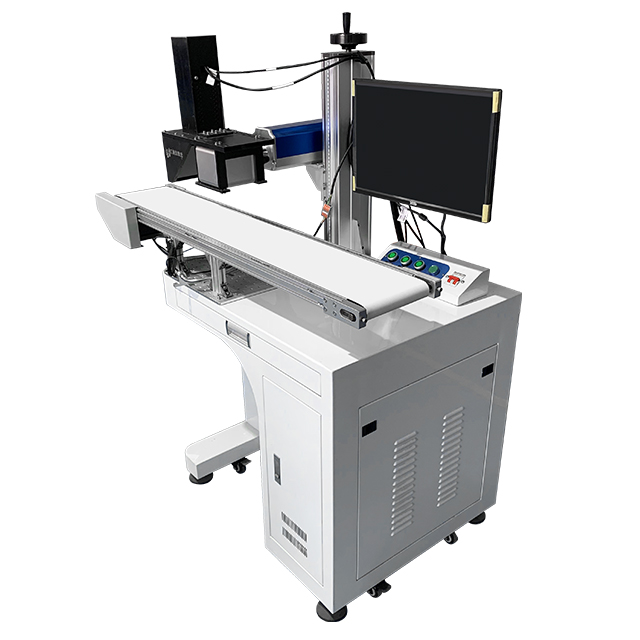
Machine Type: Automatic fiber laser marking machine with CCD vision system and conveyor
Main Use: Marking parts in batch production with better position control
Typical Marking Content: Serial numbers, QR codes, barcodes, logos, date codes, and product ID information
Laser Type: Pulse fiber laser, 1064 nm
Laser Power: 30W / 50W / 100W / 200W optional depending on configuration
Marking Field: 110×110 mm to 300×300 mm optional depending on lens selection
Vision System: CCD camera, 10 MP / 20 MP optional depending on configuration
Operation Interface: Touch panel / PC
In automated production, the challenge is often not whether a laser can make a mark. The bigger issue is whether the mark stays in the right place when parts move on a conveyor or come in slightly shifted.
This automatic fiber laser marking machine with CCD vision system is made for that kind of work. It combines fiber laser marking, camera positioning, and conveyor movement to help improve alignment and make batch marking more stable for industrial traceability.
In real production, small position changes happen all the time. A normal laser marker may need tighter fixture control to keep the mark in the correct area. With a CCD camera, this machine can check the target position before marking, which helps make the process more stable.
If the job includes repeated serial numbers, QR codes, or barcodes, manual loading can easily become the slowest step. A conveyor setup is more suitable for batch work and helps keep the whole process moving more smoothly.
Buyers usually care about more than just the laser source. They want to know whether the machine fits their product size, marking content, line speed, and handling method. That is why this machine should be viewed as a complete marking solution, not just a single device.
| What Buyers Usually Ask | What This Machine Helps With |
|---|---|
| Can the mark stay in the right place? | The CCD system helps find the marking area before marking starts |
| Can it work with a production line? | The conveyor setup is made for continuous feeding and line-side work |
| Can it handle traceability jobs? | It can mark serial numbers, barcodes, QR codes, logos, and ID content |
| Can it reduce manual work? | It helps reduce repeated manual positioning in many marking jobs |
| Can it be adjusted for different products? | Laser power, field lens, camera, and other options can be chosen depending on configuration |

Different field lenses can be used for different marking sizes. Based on the current information, the marking field can be selected from 110×110 mm to 300×300 mm depending on the lens.

The camera system helps the machine find the right marking position. This is useful when parts are not placed exactly the same in every cycle.

Software such as EZCAD2 or EZCAD3 can be used for text, logo, barcode, and QR code marking. Final software depends on configuration.
This machine uses a 1064 nm pulse fiber laser. The available power options in the current product data are 30W, 50W, 100W, and 200W. The right power level depends on the material, the marking effect, and the production speed required.
The machine combines a CCD camera and a conveyor for automated work. The current product information mentions 10 MP / 20 MP camera options and a 1.2 m conveyor reference. Whether a fixture is still needed depends on the part shape and the position accuracy required.
The listed operation interface is touch panel / PC. In actual use, the final setup should still match the product type, operator habits, and line layout.

Less Dependence on Consumables
If you compare laser marking with ink-based coding, one obvious difference is daily consumables. The current product data shows no routine marking consumables.
This can make daily operation simpler, especially in repeat production.

Better for Repeat Jobs
This type of machine is made for repeated industrial marking work. It is more suitable for stable production than occasional single-piece operation.
Actual output still depends on the material, marking content, selected power, and line speed.
| Item | Specification |
| Model Number | HF10XX-V |
| Laser Power | 30W / 50W / 100W / 200W optional |
| Laser Level | Class IV (IEC 60825-1) |
| Laser Type | Pulse fiber laser |
| Wavelength | 1064 nm |
| Marking Field | 110×110 mm to 300×300 mm optional depending on lens selection |
| Marking Depth | ≤0.01 mm |
| Marking Speed | ≤10000 mm/s depending on application |
| Marking Line Width | 0.01–0.2 mm |
| Minimum Character Size | 0.015 mm |
| Repeat Accuracy | 0.01 mm |
| CCD + Conveyor | 10 MP / 20 MP optional depending on configuration; 1.2 m conveyor reference |
| Cooling Method | Air-cooled |
| Laser Source Expected Life | >100,000 hours |
| Standard User Interface | Touch panel / PC |
| Consumables | No |
| Working Temperature | 0–45℃ |
| Power Consumption | 1000 W |
| Electrical Requirement | L/N/PE 100–240 VAC, 50/60 Hz |
Note: Final specification should be confirmed according to the selected laser source, lens, camera setup, software version, and line requirements.
Based on the current product information, this machine can be used for metals, selected plastics, and ceramics. The final marking result depends on the material itself, surface finish, coating, color, and the contrast required.
| Material Category | Examples from Current Product Content | Note |
|---|---|---|
| Metals | Stainless steel, aluminum, brass and other metal parts | Common for product ID and traceability marking |
| Selected Plastics | PE, PVC, ABS and similar plastics mentioned in the original content | Result can change depending on material formula |
| Ceramics | Ceramic components | Sample testing is recommended before final confirmation |

Plastic Parts

Hardware

Plastic Shell

Hardware Surface


Typical uses include hardware, metal parts, aluminum parts, coated parts, plastic housings, pipe products, and other industrial products that need clear product ID marking.
Optional accessories should be chosen according to the actual job. The current page content mentions the following options depending on configuration:

Electric Lift

Fume Extractor

Foot Switch

Additional Conveyor Option
Material and surface: such as bare metal, coated metal, anodized aluminum, plastic, or ceramic
Part size and marking position: this affects lens choice, camera setting, and machine layout
Marking content: fixed logo, serial number, barcode, QR code, date code, or mixed content
Required output: this affects power choice and production-line matching
Feeding method: tray loading, manual loading, linked conveyor, or other custom handling
Sample testing: recommended to check marking effect and positioning before final confirmation
The main benefit is better position checking before marking. When parts are not placed exactly the same every time, the camera helps the machine find the right marking area.
It is mainly used for metal marking, but the current product information also mentions selected plastics and ceramics. Sample testing is recommended because different materials react differently.
Power choice depends on the material, marking effect, content, and required speed. A higher power option is not always the best choice for every job.
Not in every case. The vision system can help reduce manual positioning work, but some products may still need fixture support depending on part shape and position accuracy needs.
Yes. This is one of the main uses of this machine. Final line matching should still be checked based on your layout and handling method.
Yes. Sample testing is a good way to confirm the marking result, readability, and suitable configuration before order confirmation.
To recommend a suitable automatic fiber laser marking machine with CCD vision system, please send your material, part size, marking content, required output, and line information.
If possible, send product photos, drawings, or sample parts. This helps confirm the lens range, camera setup, laser power, and conveyor arrangement more clearly.
Contact HND LASER for quotation, sample marking, and application discussion.


