
- All
- Product Name
- Product Keyword
- Product Model
- Product Summary
- Product Description
- Multi Field Search
Views: 0 Author: Site Editor Publish Time: 2025-10-24 Origin: Site


Handheld Laser Welding Machines boost precision and speed. They fit tight spaces and reduce heat zones. In this guide, you will learn how to choose, set up, and maintain one efficiently.
A handheld laser welding machine produces a concentrated beam that melts materials to form strong, precise welds. Unlike traditional welding, this process minimizes heat-affected zones, preserving the material's structural integrity. The laser beam’s accuracy enables delicate welding on thin metals and complex assemblies. It also reduces spatter, enhancing aesthetic and structural quality.
The process works efficiently for a range of metals and some plastics. Fiber and solid-state lasers provide high energy density, allowing rapid, clean welds. Operators benefit from the combination of precision and portability, making these machines ideal for automotive, electronics, and small-scale industrial fabrication.
Handheld laser welding machines consist of several essential components:
● Laser Source: Determines weld depth, precision, and lifespan. Fiber and solid-state options are common.
● Welding Head: Focuses the laser beam on the joint, allowing precise energy distribution.
● Cooling System: Essential for heat management, preventing deformation of thin or delicate materials.
● Power Supply: Converts electrical input to laser output, critical for stable operation.
● Protective Housing: Shields operators from harmful laser radiation.
● Gas Supply System: Uses inert gases like argon or helium to prevent oxidation and contamination.
Component | Function | Notes |
Laser Source | Generates laser beam | Fiber or solid-state preferred |
Welding Head | Delivers focused laser energy | Adjustable for material type |
Cooling System | Removes excess heat | Liquid or air cooling |
Power Supply | Provides energy to laser system | Stable voltage ensures weld consistency |
Protective Housing | Ensures operator safety | Includes shields and interlocks |
Gas Supply System | Protects weld zone from oxidation | Helium or argon commonly used |
Handheld laser machines primarily use fiber or solid-state lasers. Fiber lasers provide higher efficiency, faster welding, and better focus on thin materials. Solid-state lasers, meanwhile, offer robust performance for heavier metals. The choice affects compatibility, speed, and energy consumption. Certain applications may require hybrid systems to achieve optimal results.
Fiber lasers excel in repetitive, high-precision tasks, while solid-state models handle heavier joints with consistent power. Evaluating material types and thickness helps determine the ideal laser source. Always consider maintenance requirements, as each type has unique cooling and servicing needs.
Efficient cooling is crucial for handheld welding machines to prevent heat distortion. Liquid and air cooling systems remove excess energy from the welding area. Proper heat management reduces the heat-affected zone, preserving structural integrity and preventing discoloration.
Advanced machines feature automated temperature control and adaptive cooling. These features minimize operator intervention and maintain consistent welding performance. For sensitive materials, careful calibration of the cooling system ensures precision without overcooling.
Selecting the correct power level is essential for material thickness and project scope. Low-power units work well for thin metals, while thicker sections require higher wattage. Energy-efficient models reduce operating costs while maintaining performance.
Power settings often include adjustable modes, allowing operators to tailor the beam for specific materials. Battery-operated or portable systems provide flexibility but may sacrifice some energy stability.
Handheld lasers can weld metals, some plastics, and dissimilar materials with proper calibration. Metals such as steel and aluminum respond well due to high thermal conductivity. Polymers or composite materials require careful parameter adjustments to avoid burning or cracking.
Portable devices allow work on complex assemblies, automotive parts, and repair projects. Understanding material limitations ensures efficient and safe welding operations.
Portability is a key advantage of handheld laser machines. Lightweight and ergonomic designs reduce operator fatigue and enable work in confined spaces. Adjustable handles and balanced weight improve precision during prolonged use.
Ergonomic machines also increase productivity by reducing setup time and enabling easy maneuverability. Compact designs make it easier to integrate portable laser welding equipment into existing workflows.
Initial purchase price should be weighed against durability, maintenance, and energy efficiency. High-end units often provide faster throughput, longer lifespan, and better after-sales support. Budget machines may seem cost-effective but can incur additional long-term expenses.
Investing in quality ensures minimal downtime and fewer post-processing issues. Balance cost against expected ROI and operational requirements to make informed decisions.
Cost Factor | Considerations |
Initial Price | Brand, power, features |
Maintenance | Cooling, consumables, software updates |
Energy Consumption | Operational efficiency, electricity use |
ROI | Production speed, reduced defects |
Choosing a reputable brand ensures reliability, warranty coverage, and technical support. Support includes troubleshooting, component replacement, and software updates. Manufacturers with certified safety compliance reduce operational risk.
Brand reputation affects resale value and availability of spare parts. Opting for a trusted provider ensures consistent performance and safety compliance over time.
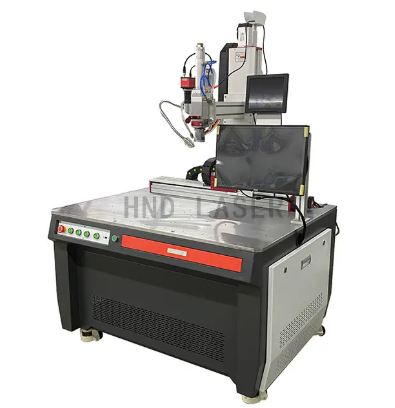
A safe workspace is essential. Ensure proper ventilation, temperature control, and sufficient lighting. Protective equipment, including laser-specific goggles and gloves, is mandatory. A clean and organized environment reduces contamination and accidents.
Workspace design should accommodate both the operator and the handheld laser welding machine, allowing smooth movement and clear access to all controls.
Carefully unpack the machine, check for damaged components, and place it on a level surface. Connect the cooling and gas systems according to the manufacturer’s instructions. Install the control software and calibrate the machine for initial test runs.
Calibration ensures precise energy delivery and consistent welds. Follow step-by-step guidelines to avoid alignment or overheating issues. Proper setup enhances longevity and operational efficiency.
Perform trial welds on sample materials to validate settings. Inspect weld quality for penetration, consistency, and appearance. Adjust power, speed, and focus as necessary. Repeat until results meet production standards.
Consistent quality checks reduce scrap and minimize rework. Portable units make it easier to test in various locations or for on-site repair applications.
Always wear laser-specific PPE, including goggles, gloves, and flame-resistant clothing. Ensure proper ventilation and secure laser interlocks. Follow manufacturer guidelines for safe operation. Regularly review protocols to stay compliant with industrial regulations.
Safety not only protects personnel but also ensures equipment longevity and consistent performance.
Handheld laser welding machines deliver faster cycle times than conventional methods. Reduced downtime and minimal post-processing accelerate production. Operators can complete more joints in less time while maintaining precision.
Automated beam control and consistent power output enhance workflow efficiency. Portable units allow work in areas where larger machines cannot fit, boosting overall productivity.
Laser welding provides high accuracy, with focused energy limiting heat transfer. This preserves surrounding materials and ensures clean joints. Thin or delicate parts benefit from reduced distortion and enhanced structural integrity.
The controlled thermal input improves both mechanical strength and appearance of welds. Portable devices maintain precision without sacrificing convenience.
These machines can weld a range of metals, plastics, and composites. They adapt to different thicknesses and alloy types, increasing operational flexibility. Applications include automotive, aerospace, electronics, and small manufacturing facilities.
The ability to handle dissimilar metals reduces the need for multiple machines. Portable laser
Handheld laser welders consume less energy compared to arc welding. Lower power usage reduces operational costs and contributes to sustainability. Minimal spatter and waste also improve environmental compliance.
By integrating energy-efficient systems, manufacturers can reduce both electricity consumption and carbon footprint. Portable devices further decrease the need for extensive infrastructure.
While upfront costs may seem high, efficiency gains justify the investment. Proper evaluation of throughput, material versatility, and maintenance requirements can offset initial expenses. Financing or phased purchases can make high-quality machines more accessible.
Consider long-term ROI rather than focusing solely on purchase price. High-quality handheld units often outperform cheaper alternatives in productivity and reliability.
Operating a handheld laser welding machine requires training. Users must understand machine parameters, material behavior, and safety protocols. Training reduces errors, improves quality, and shortens the learning curve.
Simulation and practice runs can help operators gain confidence before full-scale production. Skill development ensures the full benefits of handheld laser welding machines are realized.
Regular servicing extends machine life. Check cooling systems, replace consumables, and calibrate the laser periodically. Preventive maintenance minimizes downtime and avoids costly repairs.
Portable units may require additional attention to wiring and battery systems. A structured maintenance schedule ensures reliability and consistent performance.
Precise joint alignment is critical for weld quality. Adjustable heads, jigs, and fixtures simplify alignment, reducing errors. Misalignment can cause weak welds or wasted materials.
Portable laser welding equipment allows easy repositioning of components, enhancing flexibility in complex setups.
Handheld laser welders increasingly interface with robotic arms and IoT-enabled monitoring. Automation enhances consistency, reduces operator fatigue, and allows remote supervision.
Smart factories benefit from data collection, predictive maintenance, and automated quality control. Integration expands the scope of portable welding machines beyond manual applications.
AI enables predictive maintenance, parameter optimization, and consistent weld quality. Algorithms adjust power, speed, and focus based on real-time feedback.
This reduces human error and improves repeatability, particularly in high-volume production. AI-assisted systems can also suggest settings for new materials or geometries.
Emerging technologies allow welding of dissimilar metals and composites. Hybrid systems combine laser precision with traditional arc methods to enhance versatility.
These innovations expand the range of applications, enabling new manufacturing processes and complex assemblies. Portable solutions now handle tasks that once required multiple machines.
Handheld laser welding supports micro-welding for electronics, medical devices, and miniature components. High precision ensures reliability in delicate assemblies.
Miniaturization reduces material waste and allows intricate repairs or production tasks. This trend opens opportunities in high-tech and specialized industries.
Prices vary from a few thousand to tens of thousands of USD, depending on power, features, and brand. High-end machines provide superior performance, longer lifespan, and comprehensive support.
Price Range | Features |
$3,000–$7,000 | Basic handheld laser, portable, limited power |
$8,000–$15,000 | Mid-range, auto-focus, adjustable settings |
$16,000+ | Professional grade, multi-mode, AI-assisted |
Compare machines based on performance, durability, energy efficiency, and warranty. Feature-rich units may have higher upfront costs but reduce downtime and improve output. Evaluate potential savings from faster welding and reduced defects.
Reliable brands with global support networks provide peace of mind and consistent production quality.
Machines can be purchased online, directly from manufacturers, or via local distributors. Online purchases provide convenience, while direct manufacturer orders often include warranty and technical support. Local distributors allow inspection before purchase.
Choosing the right sourcing channel impacts delivery time, support access, and pricing.
Warranty coverage ensures repair or replacement for manufacturing defects. Technical support includes troubleshooting, calibration, and software updates. Reliable support minimizes downtime and ensures compliance with safety regulations.
Investing in machines with comprehensive warranties protects long-term operational efficiency.
Handheld laser welding machines deliver precision, speed, and efficiency. Choosing the right model ensures high-quality, cost-effective operations. HND Laser All Rights Reserved. offers advanced machines with superior portability and performance. Their equipment supports safe, reliable welding while boosting productivity and ROI.
A: A Handheld Laser Welding Machine is a portable device that delivers precise, high-speed welds on metals and some plastics. It minimizes heat-affected zones and allows work in confined spaces.
A: Set up the workspace with proper ventilation and safety gear. Calibrate the machine, test welds on sample materials, and follow the Laser Welding Machine Guide for optimal results.
A: Handheld Laser Welding Machines offer precision, portability, and faster cycle times. Portable Laser Welding Equipment reduces post-processing, improves weld quality, and saves energy.
A: Evaluate power output, material compatibility, portability, ergonomics, and long-term value. The Best Handheld Laser Welding Machine balances performance, efficiency, and maintenance costs.
A: Prices vary from basic models around $3,000 to professional units exceeding $16,000. Costs depend on power, features, and support. Consider total ROI, not just the purchase price.
A: It can weld metals like steel and aluminum, some plastics, and dissimilar materials. Testing on sample pieces ensures proper calibration and avoids damage.
A: Regularly check the cooling system, replace consumables, and calibrate the laser. Portable Laser Welding Equipment requires proper care to ensure consistent performance.
A: Yes, it’s ideal for small-scale electronics, automotive parts, and micro-welding. The laser’s precision allows detailed work with minimal material distortion.
A: Always wear laser-specific PPE, ensure ventilation, and follow manufacturer safety protocols. Adhering to guidelines keeps operators safe and protects equipment.
A: Consider material needs, portability, power output, and energy efficiency. Follow the Laser Welding Machine Guide to select a machine that maximizes productivity and ROI.


