
- All
- Product Name
- Product Keyword
- Product Model
- Product Summary
- Product Description
- Multi Field Search
Views: 0 Author: Site Editor Publish Time: 2025-10-23 Origin: Site


Laser Welding Machine is changing industry fast. It joins materials with high precision and speed. Automotive, aerospace, and medical fields benefit most. In this article, you will learn how it works and explore its advantages, applications, and future trends.
A laser welding machine uses a concentrated beam of light to melt material edges and fuse them together. Unlike traditional welding, it focuses energy precisely on small areas, reducing heat-affected zones and distortion. This precision makes it ideal for intricate parts and thin metals, such as aluminum and titanium. By controlling the beam intensity and movement, laser welding produces strong, consistent joints.
Laser welding also offers environmental advantages. Its concentrated heat minimizes energy usage and material waste, making the process more sustainable compared to MIG or TIG welding. Overall, the core principle relies on precision, repeatability, and energy efficiency, setting it apart from conventional techniques.
Tip: Evaluate the core welding principles when selecting a laser welding machine to ensure compatibility with your material types and production goals.
A typical laser welding machine consists of three main components: the laser source, beam delivery system, and workpiece positioning system. The laser source generates the energy, while the beam delivery system focuses and guides it onto the material. Precision positioning ensures that the weld occurs exactly where it is needed.
Modern machines may include automation and robotic arms to reduce manual labor. These integrations improve production speed and allow for high-volume, repeatable operations. The combination of hardware and automation creates a system capable of tackling complex industrial tasks efficiently.
Laser welding machines can employ different laser types depending on the application. Fiber lasers offer high precision and energy efficiency, making them suitable for delicate or detailed parts. CO2 lasers provide versatility across metals and non-metals and are commonly used in large-scale industrial fabrication. Nd:YAG lasers operate in pulsed or continuous modes, allowing flexible control for various metals.
Each laser type brings unique advantages. Selecting the right laser depends on material type, thickness, and desired welding speed. Matching the laser type with production requirements ensures optimal performance and quality.
Laser welding uses two primary techniques: heat conduction and keyhole welding. Heat conduction applies lower power to melt the surface, creating smooth and aesthetic welds without deep penetration. It works well for thin materials or when weld strength is moderate.
Keyhole welding involves high-power lasers that vaporize material, forming deep and narrow welds. This technique produces robust joints for thick materials or structural components. Understanding these techniques helps engineers select the most efficient method for specific applications, balancing speed, depth, and precision.
Modern laser welding machines achieve remarkable speeds, allowing high-volume production without sacrificing quality. Automotive manufacturers, for instance, can weld car chassis and battery packs more efficiently than traditional methods. Aerospace applications benefit from faster throughput while maintaining structural integrity.
High-speed welding reduces cycle times, contributing to lower operational costs. These machines also minimize thermal distortion, preserving the material’s mechanical properties. The combination of speed and accuracy enhances overall manufacturing efficiency.
Advanced laser systems feature real-time monitoring, adaptive welding parameters, and beam shaping technology. These capabilities ensure that welds remain consistent even on intricate geometries. Thin metals or delicate components can be welded with minimal errors.
Laser control systems allow operators to fine-tune beam intensity, focus, and movement, delivering predictable and repeatable results. The ability to adjust parameters dynamically reduces material waste and rework.
Robotic integration transforms laser welding into a largely unmanned process. Machines can follow programmed paths with high precision, reducing labor dependency. Industry 4.0 connectivity enables real-time monitoring and predictive maintenance, improving uptime and efficiency.
Automation also allows for scalable production, as machines can operate continuously with minimal human intervention. The integration of robots and laser welding machines enhances both speed and safety across manufacturing facilities.
Artificial intelligence further enhances laser welding efficiency. AI systems analyze weld parameters, detect anomalies, and optimize settings automatically. This reduces human error and improves consistency across multiple workpieces.
AI-assisted systems are particularly valuable in high-precision industries, such as medical device fabrication, where even minor deviations can compromise quality. By integrating AI, manufacturers achieve higher yield rates and reduced operational costs.
Laser welding machines outpace traditional MIG, TIG, and arc welding methods in speed and throughput. Factories benefit from reduced cycle times and increased production volumes. Components like automotive battery packs or aerospace fuselage sections can be welded faster, maintaining tight deadlines.
Faster production does not compromise quality. Instead, it improves consistency by reducing the variability caused by manual welding. Laser welding machines are particularly effective in high-volume environments where efficiency is critical.
Laser welding produces narrow weld beads and minimal heat-affected zones, reducing distortion and stress. Joints are stronger and more consistent, suitable for structural or safety-critical components.
High-quality welds also reduce post-processing requirements, saving time and costs. Precision control ensures that even complex geometries are joined accurately.
Laser welding machines can handle a wide range of materials, including stainless steel, aluminum, titanium, and dissimilar metals. This versatility allows applications across industries from electronics and medical devices to jewelry fabrication.
They excel in welding thin materials and joining complex assemblies. By reducing heat input, laser machines prevent damage to sensitive components and preserve material properties.
Laser welding is energy-efficient, consuming less power than traditional welding methods. It produces minimal waste and requires fewer consumables such as flux or filler material.
The process is environmentally friendly and supports green manufacturing initiatives. Manufacturers can lower energy costs while maintaining high production standards.
Laser welding machines have higher upfront costs than traditional welding systems. The investment may challenge small manufacturers with limited budgets. However, the long-term return on investment often outweighs initial expenditures due to higher productivity and lower rework rates.
Operating a laser welding machine requires specialized training. Skilled operators ensure optimal setup, accurate parameter control, and proper maintenance. Without expertise, weld quality may suffer, negating efficiency gains.
Laser beams are powerful and can cause injuries. Protective measures, such as enclosed welding cells, laser-safe eyewear, and regulated work areas, are essential. Proper training ensures a safe working environment and reduces liability risks.
Laser welding requires precise alignment of workpieces. Imperfect fit-up may lead to defects or incomplete welds. Techniques such as jigs, fixtures, or robotic assistance help mitigate tolerance issues.
Laser welding machines play a pivotal role in modern automotive manufacturing, joining structural components, battery packs, and lightweight assemblies with high precision. The technology not only accelerates production speed but also maintains superior quality and safety standards. By minimizing heat input, laser welding reduces distortion in thin metals, ensuring consistent dimensional accuracy. This precision is especially important for electric vehicle batteries and lightweight chassis, where reliability and structural integrity are critical for performance and safety.
In aerospace applications, precision and reliability are paramount. Laser welding machines deliver strong, accurate joints on engine components, fuselage sections, and lightweight structures, even when working with heat-sensitive alloys. The concentrated heat input minimizes thermal stress, preserving material properties while achieving high weld quality. Faster welding cycles enhance throughput without compromising safety standards, making laser technology indispensable in producing complex aerospace components under tight deadlines.
Micro-welding capabilities of laser machines enable the production of delicate implants, surgical instruments, and electronic circuit boards with minimal thermal damage. High-precision beam control allows manufacturers to weld small, intricate components accurately, reducing rework and material waste. This precision ensures functional reliability, biocompatibility in medical devices, and performance consistency in electronics. As demand grows for miniaturized medical and electronic devices, laser welding machines provide the accuracy required for these sensitive applications.
Laser welding enhances industrial fabrication by delivering fast, precise, and repeatable welds on steel structures, machinery components, and custom tooling. The technology replaces traditional welding methods, offering higher productivity and superior quality. With minimal heat-affected zones and reduced distortion, manufacturers can achieve stronger joints and tighter tolerances. Laser welding also supports scalability, allowing large components to be fabricated efficiently while maintaining structural integrity and meeting demanding project specifications.
Industry | Application Example | Laser Welding Advantage |
Automotive | Battery packs, chassis | High-speed, precise joints |
Aerospace | Engine parts, fuselage | Minimal distortion, strong welds |
Medical & Electronics | Implants, microelectronics | Micro-welding, high accuracy |
Industrial Fabrication | Machinery, steel structures | Consistent, durable joints |
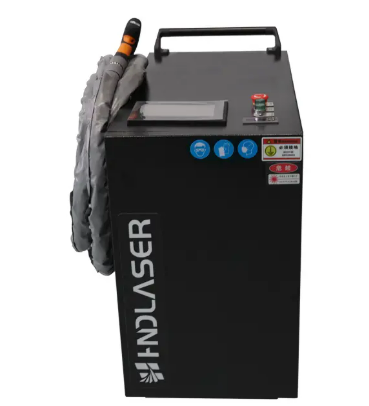
Traditional welding methods such as MIG, TIG, and arc welding differ significantly in speed, heat input, and precision. MIG welding provides moderate speed but can produce spatter and inconsistent welds. TIG welding ensures high-quality, aesthetically pleasing joints but demands skilled operators and longer cycle times. Laser welding machines surpass conventional methods by offering precise, repeatable, and high-speed welds across diverse materials, minimizing heat-affected zones and material distortion.
Although laser welding machines require higher upfront investment, their efficiency and reduced rework lower overall production costs. In high-volume manufacturing, the faster welding speed results in higher throughput and quicker turnaround times. Additionally, fewer defects and post-processing requirements reduce labor and material costs. Over time, the initial expenditure is offset by enhanced productivity, making laser welding a cost-effective solution for precision-driven industries.
Laser welding provides minimal distortion, narrow weld beads, and reduced porosity, producing stronger and more visually appealing joints. Conventional methods may require additional finishing or adjustment to achieve similar results. Laser technology ensures uniformity and precision, particularly for complex assemblies or sensitive components. By maintaining consistent weld quality across multiple batches, manufacturers can meet stringent standards while reducing scrap and rework.
Selecting an appropriate welding method depends on material type, thickness, production volume, and precision requirements. For applications demanding high accuracy, repeatability, and speed, laser welding machines are unmatched. Conversely, for simpler or low-volume tasks, traditional methods may suffice. Evaluating the production environment and specific project goals ensures the optimal balance between efficiency, cost, and quality.
Laser welding machines are increasingly integrated into IoT-enabled smart factories. These systems enable predictive maintenance, real-time monitoring, and automated workflows, reducing downtime and labor costs. Data-driven operations allow manufacturers to optimize production schedules, track performance, and respond quickly to anomalies, ensuring higher efficiency and productivity across the facility.
Future laser welding systems are expanding to handle dissimilar metals and advanced composites. Hybrid welding processes that combine laser and arc technologies deliver both speed and strong weld integrity. These advancements enable manufacturers to tackle complex materials that were previously challenging, improving design flexibility and expanding application possibilities across multiple industries.
Laser beam control continues to improve, allowing micro-welding for miniature components in medical devices, electronics, and precision engineering. Smaller spot sizes enable intricate welds with high accuracy, reducing rework and material waste. As component sizes shrink and tolerances tighten, laser welding remains the preferred choice for maintaining both quality and functionality in small-scale assemblies.
The future of laser welding emphasizes energy efficiency and reduced environmental impact. Advanced systems consume less power, generate minimal waste, and eliminate the need for consumables like flux or filler materials. By adopting cleaner fabrication practices, manufacturers can lower their carbon footprint while maintaining high-quality production standards.
Laser welding machines enhance precision, speed, and efficiency. They outperform traditional methods and support diverse materials. HND Laser All Rights Reserved. offers advanced machines that boost productivity and quality, providing value across automotive, aerospace, electronics, and medical industries.
A: A Laser Welding Machine uses focused light beams to join materials with precision and speed. It provides superior weld quality compared to traditional methods. This laser welding technology overview ensures consistent, high-strength joints.
A: Laser welding melts material edges with a concentrated beam. Heat conduction and keyhole techniques control penetration depth. This process shows how laser welding revolutionizes fabrication by minimizing distortion and maximizing accuracy.
A: Benefits include high-speed production, precise welds, minimal heat-affected zones, and versatility across metals. Using a Laser Welding Machine improves efficiency and demonstrates the advantages of laser welding in manufacturing.
A: Laser welding provides faster processing, higher precision, and less distortion. Unlike MIG or TIG, it allows complex shapes and micro-welding, highlighting innovations in laser welding technology.
A: Automotive, aerospace, medical, electronics, and industrial fabrication gain efficiency, accuracy, and sustainability. Laser welding machines enhance production speed while maintaining high-quality standards.
A: They have higher initial costs, but reduced rework, faster production, and improved quality often justify the investment. These machines offer long-term savings through benefits of laser welding in manufacturing.
A: Regular inspection of the laser source, optics, and positioning system is essential. Proper care ensures reliable operation, supporting how laser welding revolutionizes fabrication.
A: Yes, Laser Welding Machines work with stainless steel, aluminum, titanium, and dissimilar metals. Their versatility is a key innovation in laser welding technology.
A: AI, robotics, and automation enhance precision, speed, and consistency. These innovations in laser welding technology enable smarter, more efficient fabrication processes.


