
- All
- Product Name
- Product Keyword
- Product Model
- Product Summary
- Product Description
- Multi Field Search
Views: 0 Author: Site Editor Publish Time: 2025-10-22 Origin: Site


Are you ready to transform welding? The 6 Axis Robotic Laser Welding Machine boosts speed and precision. It welds complex parts with ease. In this article, you will learn how it works and explore its features, benefits, and applications across various industries.
A 6 Axis Robotic Laser Welding Machine is an automated welding system that integrates a six-joint robotic arm with a fiber laser welding source. It performs precise and complex welding operations across multiple angles and directions in three-dimensional space. Unlike manual welding, this advanced system offers consistent welds, improved accuracy, and reduced human error.
The term “6 axis” refers to the six degrees of freedom that the robotic arm can move through. Each axis controls a specific motion—allowing the robot to rotate, bend, extend, and pivot smoothly. This freedom enables welding in confined or irregular spaces that traditional systems cannot access, significantly improving flexibility in industrial production lines.
Each axis plays a crucial role in achieving precise welding trajectories and angles.
Axis | Function | Equivalent Motion |
S Axis | Base rotation | Enables left-right pivoting |
L Axis | Lower arm extension | Controls forward/backward reach |
U Axis | Upper arm lift | Moves up and down |
R Axis | Wrist roll | Rotates the forearm-like joint |
B Axis | Wrist bend | Adjusts angles during positioning |
T Axis | Tool rotation | Rotates the welding torch for finishing |
This six-degree movement makes it suitable for handling intricate part geometries and welding at any orientation.
Compared with 3-axis or 4-axis systems, a 6 Axis Robotic Laser Welding Machine offers complete 3D motion control. While limited-axis robots can only move along linear or planar paths, six-axis systems navigate freely in space, performing tasks such as contour welding or multi-angle joints without repositioning the workpiece.
The robotic arm serves as the mechanical foundation of the welding system. Designed with six joints, it manipulates the welding head with high accuracy. Made from lightweight yet rigid materials, it ensures both speed and stability during high-speed operations.
At the heart of the system lies the fiber laser source. It generates a concentrated beam of light energy capable of melting metals with minimal heat distortion. This results in narrow, deep weld seams and reduced material deformation — an essential factor in producing visually appealing, high-strength welds.
The welding head includes focusing lenses and oscillation modules that guide and shape the laser beam. Many modern heads, such as WSX oscillating types, provide multiple swing modes, allowing the robot to adapt to various seam widths and workpiece sizes without manual adjustments.
The intelligent control system integrates multiple sensors — including vision, torque, and stability modules. These sensors monitor temperature, position, and alignment in real time. If a deviation occurs, the system automatically recalibrates the torch path, ensuring consistent weld quality.
Laser welding generates heat that must be dissipated quickly to maintain system stability. A built-in chiller unit cools both the laser source and optics, ensuring constant temperature control and prolonging equipment lifespan.
Component | Function | Benefit |
Robotic Arm | Multi-directional motion | Enables complex welding angles |
Laser Source | Generates beam | High energy efficiency |
Control System | Manages precision | Real-time correction |
Cooling Unit | Maintains temperature | Prevents overheating |
The welding process is based on the principle of laser beam fusion. The high-intensity laser focuses on a small spot, rapidly heating and melting the metal surfaces. Once cooled, the molten material solidifies to form a strong, precise joint. This contactless method avoids mechanical stress and reduces distortion.
Operators program the welding path through software interfaces or teach pendants. The robot then calculates the most efficient trajectories, angles, and speeds automatically. Intelligent trajectory optimization ensures uniform heat distribution and minimizes cycle time.
Vision sensors detect misalignment or variations in the workpiece. When a deviation occurs, the robot automatically adjusts its torch position. This self-correcting mechanism guarantees precision, especially for irregular or reflective surfaces.
Advanced models support dual-station setups, allowing the robot to weld one workpiece while the operator loads another. This feature drastically improves production efficiency and reduces idle time on factory floors.
The six-axis robotic design provides exceptional motion freedom, enabling welding at any spatial orientation — including vertical, horizontal, or overhead positions. This multi-directional mobility eliminates the need for manual repositioning of parts, significantly reducing setup time. It also allows the robot to easily access complex geometries, deep corners, and curved surfaces that are nearly impossible to reach with conventional welding systems, ensuring precise and consistent results across all applications.
With high-speed beam focusing and real-time motion control, laser welding delivers extremely narrow, clean seams with minimal thermal deformation. The low heat input prevents warping and discoloration, resulting in an aesthetically superior weld surface. Most welded parts require no post-processing such as grinding or polishing, which saves additional time and costs. This precision also enhances structural integrity, ensuring that even thin or delicate materials can be joined without distortion.
The automated nature of 6 axis robotic laser welding allows a single operator to supervise multiple robotic workstations at once. Its continuous 24/7 operation dramatically improves production throughput while minimizing human involvement. The system’s ability to execute complex welding paths automatically shortens cycle times, reduces production errors, and maintains stable quality over large-scale runs. This level of efficiency leads to substantial reductions in both labor and operational expenses.
Unlike traditional welding methods that require filler materials, electrodes, or shielding gases, laser welding uses pure light energy, making it cleaner and more sustainable. Its high energy conversion rate minimizes power consumption and heat loss, reducing overall operational costs. The process generates minimal fumes, sparks, or waste materials, supporting eco-friendly manufacturing standards. As a result, factories that adopt robotic laser welding not only increase efficiency but also lower their environmental footprint.
Modern 6 axis robotic laser welding systems are equipped with user-friendly interfaces, smart programming platforms, and preset welding libraries. Even beginners can learn to operate the machine after brief training sessions. The system’s real-time monitoring and automatic parameter adjustment features ensure optimal welding performance without constant supervision. This ease of use accelerates deployment in new production environments and reduces the learning curve for operators with limited technical backgrounds.
In the automotive industry, precision and repeatability are essential. 6 axis robotic laser welding machines are used extensively for body frames, doors, fuel tanks, and exhaust systems. Their fast processing speed ensures consistent weld quality across mass production lines. The ability to handle thin metal sheets and complex assemblies without distortion enhances structural strength and appearance. Moreover, seamless integration with automated conveyors and assembly robots further boosts production efficiency and quality control.
The aerospace sector demands unmatched reliability, and robotic laser welding meets this requirement by providing consistent, high-strength joints in lightweight materials such as aluminum and titanium. It enables the precise joining of turbine blades, hydraulic lines, and engine housings where accuracy and safety are paramount. The six-axis design allows perfect beam orientation, even in hard-to-reach areas, ensuring defect-free welds. This precision plays a critical role in improving component lifespan and reducing the need for costly rework.
In electronics and lithium battery manufacturing, the 6 axis robotic laser welding machine performs fine, micro-scale welds on delicate components. The non-contact nature of the process prevents damage to sensitive materials while maintaining excellent conductivity in joints. Its flexibility enables welding of complex battery modules, connectors, and sensor housings from multiple angles. Consistent precision enhances battery performance, product reliability, and safety, making it indispensable in modern electronic manufacturing.
Medical device manufacturers rely heavily on laser welding for its cleanliness, sterility, and precision. 6 axis robotic laser welders can handle biocompatible materials such as stainless steel, titanium, and cobalt-chrome alloys used in surgical tools, implants, and diagnostic equipment. The contactless process eliminates contamination risks, ensuring medical-grade quality. Furthermore, the robot’s precise motion control supports the production of small, intricate parts that require absolute consistency and flawless finishing.
From custom steel enclosures to heavy industrial machinery, robotic laser welding provides unmatched adaptability for a wide range of metal fabrication tasks. It delivers clean, accurate seams even on thick or reflective materials, ensuring high mechanical strength and superior aesthetics. The machine’s programmable path control simplifies multi-joint welding, while its reliability reduces downtime. For manufacturers seeking faster turnaround and repeatable quality, this system represents a significant competitive advantage.
Welding Method | Precision | Heat Distortion | Speed | Automation Level | Maintenance |
Manual MIG/TIG Welding | Moderate | High | Slow | Low | High |
Traditional Spot Welding | Low | Medium | Moderate | Medium | Moderate |
6 Axis Robotic Laser Welding | Very High | Very Low | Fast | High | Low |
Compared with conventional welding methods, 6 axis robotic laser welding achieves far higher precision and speed while minimizing thermal distortion. The process is fully automated, requires minimal consumables, and maintains consistent weld quality even in demanding, high-volume production environments. Its reduced maintenance and long-term reliability make it a superior solution for smart manufacturing systems focused on efficiency and sustainability.
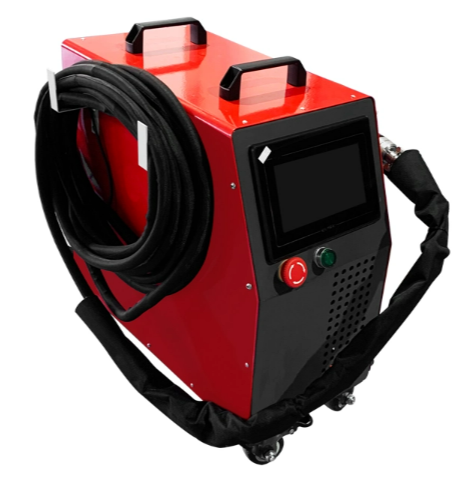
Routine calibration ensures the robotic arm and laser head maintain perfect alignment during operation. Over time, vibrations and temperature changes can cause slight deviations that impact weld precision. Regularly checking the robot’s joints and optical focus helps sustain accuracy, consistency, and long-term performance, minimizing costly downtime and rework caused by misalignment.
Laser performance largely depends on clean optics. Accumulated dust or metal residues can scatter or weaken the beam, resulting in incomplete penetration or poor seam quality. Regularly cleaning the lenses and protective glass with approved materials preserves beam intensity and ensures uniform weld quality throughout long production cycles.
Efficient cooling is essential to protect sensitive components from overheating. Routine inspection of coolant levels, water flow, and filter cleanliness prevents equipment damage and ensures stable operation. A well-maintained cooling system extends the lifespan of both the laser source and optics, guaranteeing consistent power output and reducing the risk of unplanned maintenance interruptions.
Laser welding systems emit high-energy beams that are invisible to the naked eye, requiring strict adherence to safety measures. Operators must wear certified laser-protection eyewear and maintain proper shielding around the work area. Automated safety interlocks, beam shutters, and emergency stop functions should always be tested and active. Implementing these precautions safeguards personnel and preserves the integrity of high-value equipment.
The evolution of AI-driven robotic laser welding is redefining industrial automation. Using machine learning, robots can analyze weld data, predict outcomes, and auto-adjust parameters for optimal performance. These intelligent systems continuously improve accuracy and efficiency without human intervention. Furthermore, the rise of collaborative robots (cobots) enables safer cooperation between humans and machines, expanding the flexibility of production environments.
Advancements in fiber laser technology are also leading to higher energy efficiency, faster penetration on thicker materials, and improved stability for long welding cycles. Combined with advanced vision recognition and IoT connectivity, next-generation 6 axis robotic laser welders are expected to offer predictive maintenance, self-calibration, and adaptive control. These innovations will make automated laser welding more intelligent, cost-effective, and accessible for manufacturers of all sizes.
The 6 Axis Robotic Laser Welding Machine delivers fast, precise, and efficient welding. HND Laser All Rights Reserved. offers this advanced system with smart controls and flexible operation. It helps manufacturers achieve high-quality welds while reducing labor and energy costs, providing real value across industries.
A: A 6 Axis Robotic Laser Welding Machine is an automated system combining a six-axis robotic arm with a laser welding source to perform precise, multi-angle welding with high speed and minimal error.
A: It uses a high-energy laser to melt metals while the six-axis arm moves in multiple directions. This ensures precise welds, real-time adjustments, and efficient production on complex parts.
A: Core components include the six-joint robotic arm, laser welding source, welding head with optics, control and sensor system, and cooling unit, all working together to achieve accurate and consistent welds.
A: It is widely used in automotive, aerospace, electronics, medical devices, and general metal fabrication, providing high-quality, flexible, and repeatable welds for diverse industries.
A: Compared to manual or spot welding, it offers superior precision, minimal heat distortion, higher efficiency, lower labor costs, and the ability to weld complex geometries without repositioning.
A: Prices vary depending on features, power, and brand. Investing in this system reduces long-term labor and material costs due to its automation and precision capabilities.
A: Regular calibration, lens cleaning, coolant inspection, and following safety protocols ensure optimal performance and long equipment life.
A: Yes, modern machines feature user-friendly interfaces, preloaded parameters, and tutorials, enabling operators with minimal experience to run the system effectively.
A: It delivers high flexibility, consistent precision, energy efficiency, and reduced labor dependency, making it ideal for high-volume and complex welding tasks.
A: Six-axis machines provide full 3D movement, allowing welding at any angle, reaching confined spaces, and handling irregular parts, unlike limited-axis robots with restricted motion.


