
- All
- Product Name
- Product Keyword
- Product Model
- Product Summary
- Product Description
- Multi Field Search
Views: 0 Author: Site Editor Publish Time: 2026-09-04 Origin: Site


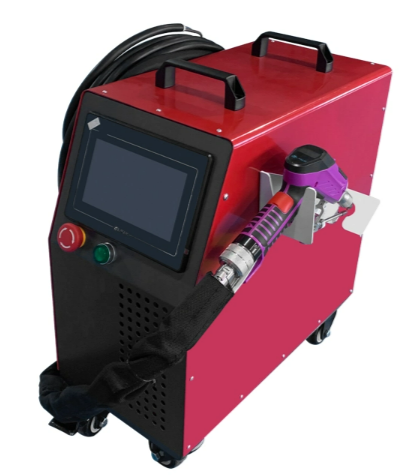
A handheld laser welding machine is a portable tool you operate by hand. It uses a focused laser beam to melt and join metal parts. This creates a strong bond between them. The basic process is simple. The machine makes the laser beam. It aims the beam exactly at the metal. The strong heat melts the material right away. This welding action creates a pool of melted metal. The pool connects the pieces as it cools. You will learn about the main parts of the machine. The science behind how laser welding works is also explained. You will see the good and bad points of laser welding compared to older welding methods. This direct look helps you understand this new, efficient tool.
Handheld laser welding machines are portable tools that use a focused laser beam to join metals quickly and precisely.
They work 3 to 4 times faster than TIG welding and cut down a lot on the time needed for grinding after welding.
The wobble function stirs the melted metal, which makes welds stronger and lets you join small gaps without adding filler material.
These machines can weld different metals, such as stainless steel, aluminum, and copper, up to 8mm thick, based on their power.
Wearing the right safety gear is a must when using these machines, including special laser glasses and clothes that won't catch fire.
A handheld laser welding machine changes how metal shops work in a big way. This portable tool uses a strong laser to join metal pieces together. Old arc welding needs you to create an arc, but this tool does not. You just point the beam at the joint and pull the trigger. The machine does the rest with great accuracy. This method creates strong metal bonds without the hard steps of older ways.
The word "handheld" means more than just how it looks. It shows a design idea focused on giving the operator freedom. The welding gun itself usually weighs between 700 g and 1.2 kg. This light build helps reduce tiredness during long work hours. Companies like HND Laser, a leader with patents in laser equipment, have improved this comfortable design through years of experience.
Several design features make this equipment easy to move around. Simple screens make it easy for both new and skilled users. Comfortable controls reduce strain during long use. Easy setting choices allow quick start without much training. Preset programs give steady results with little changes. Clear displays show instant feedback while working. These features work together to make learning much faster.
The ability to move around goes beyond just weight. Handheld laser welding cuts down on big setups and needs less prep than old methods. You can weld parts and structures that are hard to reach with fixed machines. The small design lets you move easily in tight areas. You can work right on large vehicle frames or in small spaces. Fixed systems just cannot offer this kind of flexibility.
The gains in productivity are large. This laser welding technology works 3 to 4 times faster than TIG welding. One shop reported cutting post-weld grinding time from 8 hours per assembly down to just 2 hours. That means 6 hours saved on every assembly. For a busy shop, these savings add up fast across many projects.
Knowing the main parts helps you see how this technology works. Every handheld laser welding machine has several key systems that work together.
Laser Source: This part creates the beam. Entry-level air-cooled systems make 1 to 1.5 kW of power. Mid-range water-cooled systems give 1.5 to 3 kW. For most shops, 1.5 to 2 kW works well for sheet metal and thin-wall tubing.
Beam Delivery System: A fiber optic cable carries the laser beam to the welding head. High-purity glass reduces energy loss and stops distortion. A collimating lens turns the spreading beam into a parallel one. The focusing lens then narrows the beam to a tiny spot. A protective shield keeps the optics safe from splatter during work.
Wobble System: Mirrors stir the melted pool while welding. This motion widens the weld area and makes the joint stronger. It lowers porosity and improves evenness across the seam. The movement also allows more room for part gaps and position errors.
Cooling System: High-power machines use water cooling with a chiller and pump. Lower-power handheld welders up to 1500W use air cooling with fans and copper sinks. This stops overheating and allows nonstop work.
Control System: An embedded controller adjusts power, speed, and pulse rate. Real-time checks and safety alerts protect both the user and the machine. HND Laser keeps improving in this area. Their patents show deep knowledge in laser equipment design. When you pick a handheld laser welding machine, you invest in technology that changes metal fabrication work.
The laser welding process starts inside the machine. You need to understand how the beam forms. This knowledge helps you use the technology correctly.
A fiber laser source creates the beam. Laser diodes emit pump light. This light matches the absorption spectrum of rare-earth dopants in the fiber core. The pump light excites electrons to higher energy levels. This creates population inversion. More electrons now occupy excited states than ground states. Stimulated emission occurs when an incoming photon interacts with an excited electron. The electron drops to a lower energy level. It releases a coherent second photon. The resonator cavity amplifies the light. The fiber ends have mirrors. Light circulates back and forth through the doped fiber. Multiple passes amplify the light intensity. The beam exits the cavity through a partially reflective mirror. This forms a coherent laser beam suitable for laser welding.
The beam travels through an optical fiber delivery system. Fiber optics transmit laser beams precisely and flexibly. This system maintains stable beam alignment. At the processing head, collimating optics convert the divergent fiber output into a parallel beam. A focusing lens then concentrates the beam. The lens bends all incoming parallel laser rays inward. The rays converge at a single focal point. This concentration of the beam's power into a spot of only 0.1mm to 0.3mm creates maximum energy density. For example, with 1200 W power and a 0.8 mm spot, the energy density exceeds 10⁶ W/cm². This enables keyhole formation and deep penetration. The focus position can be adjusted to control penetration depth and seam width. The focus position directly affects laser welding quality.
The actual process uses this focused energy. The laser welding process melts the metal at the joint. The high energy density creates a weld pool. The pool connects the pieces as it cools. This is a key aspect of laser welding technology.
The wobble function plays a key role in modern laser welding. Mirrors oscillate the laser beam in controlled patterns. This oscillation increases the effective laser action area. The wobble function expands the range. It allows the process to bridge larger joint gaps. The oscillating beam melts both sides of the joint more fully. The beam movement stabilizes molten pool flow. This reduces spatter and pores. The wobble function lowers assembly precision requirements. This allows less accurate part alignment. Understanding this technology helps you achieve better quality.
However, you must understand the trade-offs. Spreading energy laterally broadens the weld pool. It reduces penetration depth unless you adjust power or travel speed. Excessive wobble amplitude can lead to shallow penetration. Properly optimized wobble widens the process window. The laser welding quality depends on these settings.
The rapid cooling rates in laser welding produce fine-grained structures. Fast cooling traps hydrogen leading to pore formation. Slow cooling allows hydrogen to escape. This eliminates residual pores.
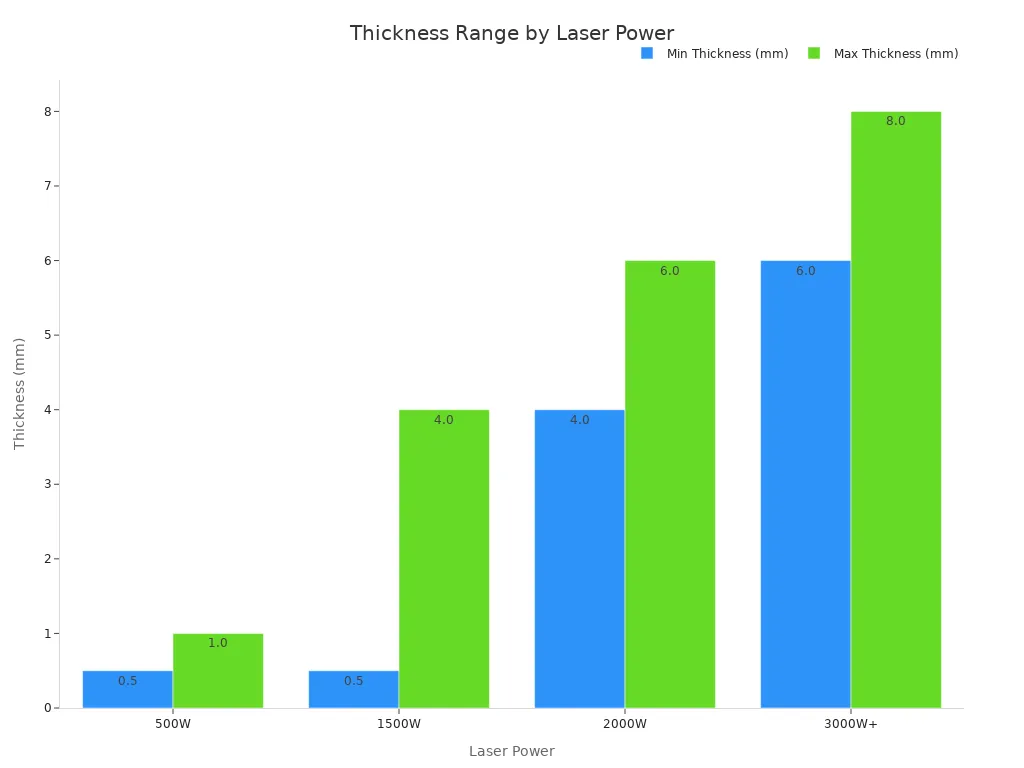
You can weld many materials with this technology. Handheld laser welding machines can weld stainless steel, carbon steel, aluminum, copper, brass, titanium, and nickel alloys. A 1000W machine welds stainless steel up to 3 mm. A 1500W machine welds up to 5 mm. A 2000W machine welds up to 8 mm. For welds greater than 0.3 mm, use a wire feed. For material under 1 mm, laser welding without wire feed is advised.
You will see the speed difference right away. Handheld laser welding is 3 to 4 times faster than TIG welding. This method skips the slow steps of getting filler rods ready and cleaning each pass. You just point the beam and pull the trigger. The focused energy melts the joint in one smooth move.
Precision makes this method stand out from MIG and TIG. The beam puts power into a spot only 0.1mm to 0.3mm wide. This accuracy lets you weld thin materials without burning through. The low heat input cuts down distortion a lot. Your parts keep their shape without heavy clamping or straightening later.
You cannot use one set percentage for finishing time savings. The honest way is to measure abrasive minutes per accepted part before and after a trial under the same conditions. Every shop gets different results based on material, joint design, and operator skill.
The wobble function gives you more room for parts that do not fit perfectly. When gaps are 0.3–0.5mm, the moving beam pulls material from both sides to fill the opening without filler. This saves setup time and cuts down rework.
Precision allows autogenous welding when machined parts fit tightly with gaps under 0.1mm.
The wobble method stirs the melted pool to fill gaps up to 0.3–0.5mm without additives.
Gaps over 0.5mm need filler wire because precision alone cannot add missing material.
Many laser welding jobs need no filler wire. When wire is used, the ratio is usually 1:1—one inch of wire for one inch of weld. The small, focused beam melts thin materials with little distortion, creating deep welds with lower heat input.
You can weld stainless steel, carbon steel, aluminum, copper, brass, titanium, and nickel alloys. A 1000W machine handles stainless steel up to 3mm thick. A 2000W unit reaches 8mm. These uses cover automotive repair, sheet metal work, and custom manufacturing.
The biggest downside is cost. Good systems cost a lot more than traditional welders. You also face strict safety rules that require careful habits.
Laser safety glasses must match the exact wavelength and optical density of your machine.
A laser welding helmet, heat-resistant gloves, and flame-resistant clothing are required.
Regular welding helmets and safety glasses do not protect you from laser beams.
Skin risks from infrared and ultraviolet radiation mean you need full coverage. You protect yourself from burns, skin cancer risk, and early aging. These safety steps add to the total cost of using this technology. Still, the speed, precision, and weld quality you get often make it worth the money for serious fabrication shops.
A handheld laser welding machine gives you a portable way to create strong, precise joints. You direct a focused beam onto metal, melting and fusing pieces together. The wobble function stirs the weld pool, improving quality and filling small gaps.
This laser welding technology works faster than traditional methods. You get low heat input, which reduces distortion. You also face real costs and safety demands. Proper eye and skin protection is non-negotiable.
Laser welding offers remarkable speed and precision. Understanding its operation and safety needs matters before you add this tool to your workflow. The investment pays off when you respect the process.
This technology handles many materials. You get good quality. A 2000W unit reaches 8mm thickness.
Not always. Laser welding works without filler. The wobble function fills gaps. Results stay high with or without wire.
Laser welding is 3 to 4 times faster than TIG. This method saves hours per assembly.
Laser welding needs proper gear. Use a helmet and flame-resistant clothing. This laser welding method requires care.
No. The method is simple to learn. The handheld design reduces the learning curve. Laser welding quality comes quickly.


